
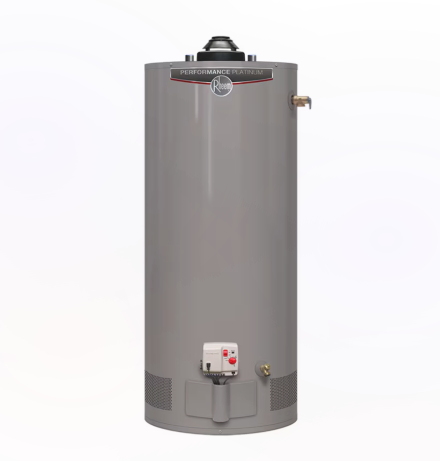
Decoding the Rheem Performance Platinum Series: Hybrid vs. Tankless
The Rheem Performance Platinum designation refers to a premium product tier rather than a specific water heater model. This classification encompasses distinct high-efficiency technologies, primarily separating electric hybrid heat pump units from gas-fired condensing tankless systems.
Choosing between these configurations depends on existing utility infrastructure and operational priorities. The hybrid heat pump models operate entirely on electricity, extracting heat from surrounding ambient air to warm stored water. These units achieve an exceptional Uniform Energy Factor (UEF) up to 4.07, making them highly effective for reducing ongoing utility consumption in all-electric homes.
In contrast, the condensing tankless models utilize natural gas or liquid propane. They heat water on demand via a secondary heat exchanger that captures latent exhaust heat, delivering a UEF up to 0.93. While tankless units offer an endless hot water supply without a storage tank, hybrids yield the highest absolute efficiency numbers.
When upgrading your home’s water heating system, evaluating these structural differences in baseline fuel sources and thermal dynamics ensures you select the correct platform for your specific property requirements.
Retrofit Realities for the Hybrid Heat Pump (HPWH)
Retrofitting a Rheem Performance Platinum Hybrid Heat Pump Water Heater (HPWH) requires accounting for distinct mechanical and spatial variables that differ significantly from standard electric storage tanks. Addressing these specific heat pump water heater installation requirements is critical to maintaining system efficiency and preventing post-installation callbacks.
The three primary physical constraints to manage during a residential retrofit include:
- Acoustic Profile (53 dBA): The top-mounted compressor and fan assembly produce an operational noise level of approximately 53 dBA. Because of this continuous acoustic footprint, placement must be strategically selected to avoid proximity to bedrooms or main living zones, making unconditioned garages, ventilated basements, or dedicated mechanical rooms preferable.
- Air Volume & Ducting: The heat pump relies directly on ambient air to transfer heat. The system demands a minimum of 700 cubic feet of surrounding air space to operate efficiently. When squeezing this unit into a confined closet under this volumetric threshold, you must run 8-inch ducting to route intake and exhaust air to an adequate external air mass.
- Condensate Management: As an inherent byproduct of the refrigeration cycle, the evaporator coil extracts substantial moisture from the air. You must integrate a dedicated gravity condensate line or install a secondary condensate pump to route the discharge out of the property, ensuring compliance with local drainage codes.
The Re-circulation Loop Algorithm Trap
Plumbing an unmanaged external recirculation loop into a Rheem Performance Platinum HPWH triggers a critical firmware conflict. The unit’s operating algorithm relies on specific tank temperature sensors to engage the compressor. If a continuous recirculation pump returns water to the bottom inlet at or above 102°F, the control board interprets this thermal data as a satisfied load.
Consequently, the software algorithm prevents the heat pump cycle from firing. This creates a severe operational trap. When the mid-tank temperature drops but the inlet detects returning hot water above the 102°F threshold, the system defaults entirely to its auxiliary electric resistance elements to cover the thermal delta. This bypasses the high-efficiency refrigeration cycle completely, dropping the unit’s operational efficiency down to standard electric tank levels. When troubleshooting short-cycling or soaring utility bills on these hybrid retrofits, diagnosing hot water re-circulation issues requires verifying that return line aqua-stats or timers cut off well below this algorithmic limit.
Gas Tankless Specs: Venting and Flow Rates
Executing condensing gas water heater upgrades using the Rheem Performance Platinum series provides substantial installation flexibility within tight structural footprints. This ultra-high efficiency condensing platform incorporates a secondary stainless steel heat exchanger, operating under precise infrastructure and mechanical metrics:
- Venting Tolerances: The system safely routes flue gases through standard Schedule 40 PVC, CPVC, or polypropylene. Allowable maximum single-vent runs reach up to 150 feet with 3-inch PVC, or up to 60 feet with 2-inch PVC setups.
- Gas Supply Integration: Advanced manifold engineering permits direct 1/2-inch gas line compatibility for runs up to 24 feet, completely bypassing the typical labor-intensive requirement to upsize to a 3/4-inch line from the gas meter.
- Low-Flow Activation: Incorporates a highly sensitive flow sensor with an activation rate of 0.40 GPM, eliminating cold-water sandwiching during minor domestic micro-draws.
- Condensate Mitigation: Features an internal, built-in condensate neutralizer that treats acidic wastewater before discharge into domestic drains.
EcoNet Diagnostics and Built-In Leak Protection
The Rheem Performance Platinum series integrates the EcoNet control system to provide direct safety and diagnostic updates. As an installer, the clear advantage is the factory-installed leak detection cable looping the base pan. The moment it registers moisture, it commands the integrated automatic water shutoff valve to close the main cold intake, neutralizing potential flood damage instantly. This makes it an incredibly reliable option among modern automated water leak shutoff systems. Furthermore, the module tracks operational runtime, pushing a distinct maintenance alert at the 500-hour mark so you know exactly when to flush the tank and check the anodes.